Since 2011, electronic invoices (e-invoices) have been deemed equivalent to paper invoices for VAT purposes. The introduction of e-invoicing in Germany’s public administration was another important milestone in the digital transformation of administrative processes. Since late 2019, the federal administration has been required to accept and process e-invoices; and since 27 November 2020, all invoice issuers have been required to send e-invoices to their customers in the federal administration.
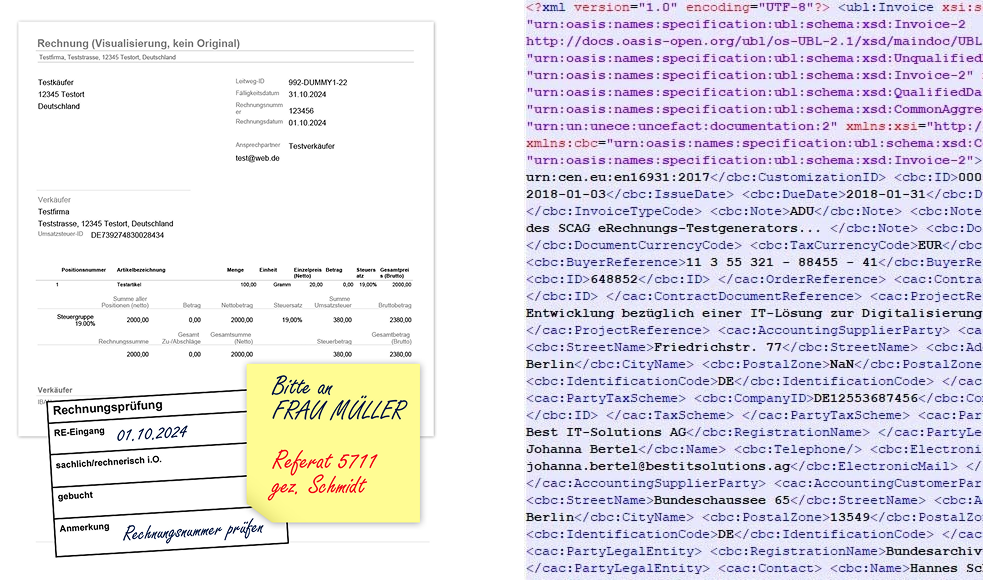
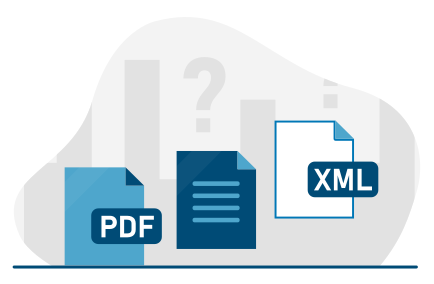
However, in practice there remains uncertainty with regard to e-invoicing. From a technical standpoint the term “e-invoice” is unclear: in everyday language the term is often used to refer to invoices in human-readable formats as well as to invoices in structured data formats. However, invoices in human-readable formats such as PDF files are not electronic invoices as defined in Directive 2014/55/EU.
To demonstrate the differences between the various invoice formats, we will examine them here in detail.