
Since September 2025, the federal administration has been receiving electronic invoices via a central platform: the OZG-RE. One year after the consolidation of the ZRE and OZG-RE, it is clear what benefits this consolidation has brought for public administration and businesses.
From Two Platforms to a Unified Solution
Until September 2025, incoming e-invoices for the federal government were processed via two separate invoice submission portals: the Central Invoice Submission Portal (ZRE), operated by ITZBund, and the Online Access Act-compliant Invoice Submission Portal (OZG-RE), operated by the Procurement Office of the Federal Ministry of the Interior (BeschA). However, running both platforms in parallel created additional effort in terms of operation, maintenance, and further development, as well as requiring suppliers to register multiple times.
Based on a comprehensive technical, organisational, and economic analysis, the OZG-RE was designated as the target platform jointly by the Federal Ministry of the Interior (BMI) and the Federal Ministry of Finance (BMF). Upon completion of the migration on 19 September 2025, all 187 technical invoice recipients of the ZRE were transferred to the OZG-RE. At the same time, the ZRE was taken out of service for invoice receipt and shut down at the end of 2025.
One year after the first authorities began switching over, it is clear that the consolidation has achieved its key objectives and established a unified foundation for incoming e-invoices across the federal government.
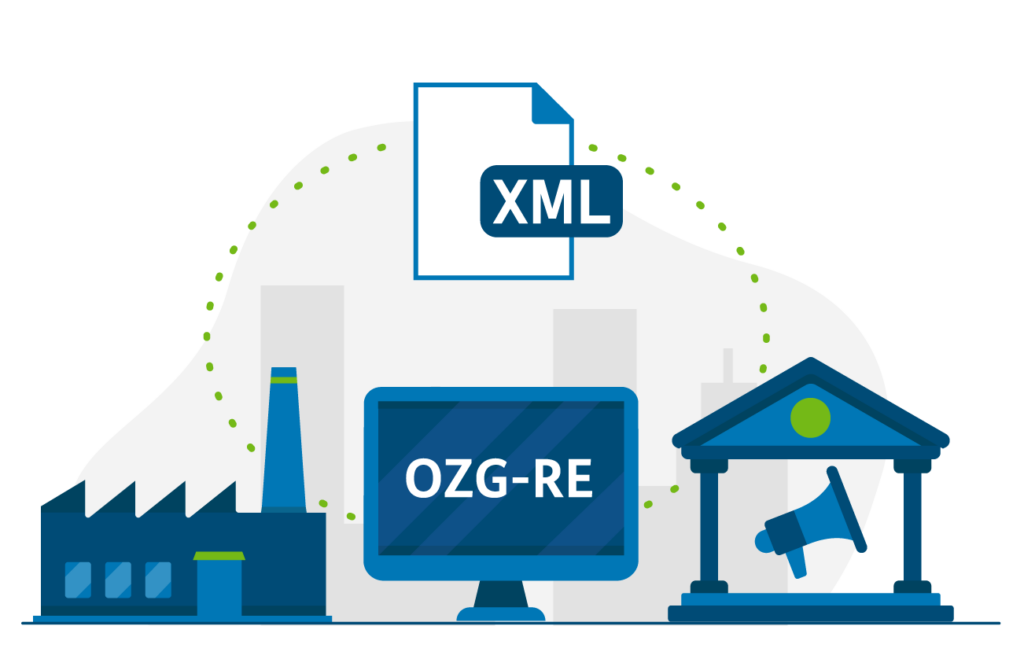
Benefits of the Platform Consolidation
The consolidation on the OZG-RE brings benefits for various user groups.
For suppliers and businesses, duplicate registrations and technical redundancies are eliminated. More than 330,000 e-invoices per month are now submitted via a single central platform to the entire direct federal administration, more than 170 entities of the indirect federal administration, and currently five federal states. Access via the ELSTER company account also enables integration with already established processes.
The consolidation generates efficiency gains: a central platform reduces the effort required for interface maintenance and creates uniform conditions for further development. New features — for example for outgoing invoices or the transmission of VAT data — will in future only need to be developed and deployed once.
Lessons Learned for Future Projects
The consolidation of ZRE and OZG-RE has provided valuable lessons for future digitalisation, migration, and consolidation projects. Key success factors included early and structured planning, the standardisation of processes and interfaces, and realistic piloting prior to the full-scale rollout.
In addition, centralised governance structures, clearly defined preconditions for migration, and target-group-oriented communication proved to be important success factors. The experience gained from this project demonstrates that technical, organisational, and communication-related aspects must be considered together from the very beginning in order to implement complex change initiatives efficiently.
A further key success factor was the close collaboration among all parties involved. The early engagement of authorities, suppliers, and IT service providers helped to identify challenges at an early stage and to carry out the transition as planned.
Conclusion: A Foundation for Further Digitalisation
The platform consolidation has reduced the technical and organisational complexity of incoming e-invoices in the federal government and established a unified infrastructure. At the same time, important experience has been gained for future consolidation and digitalisation projects.